
Foundations in the Mud, and Other Divine Necessities of the Real
Black Dirt, Blacker Truth: A Gospel on Mud, Char, and Getting Things Done

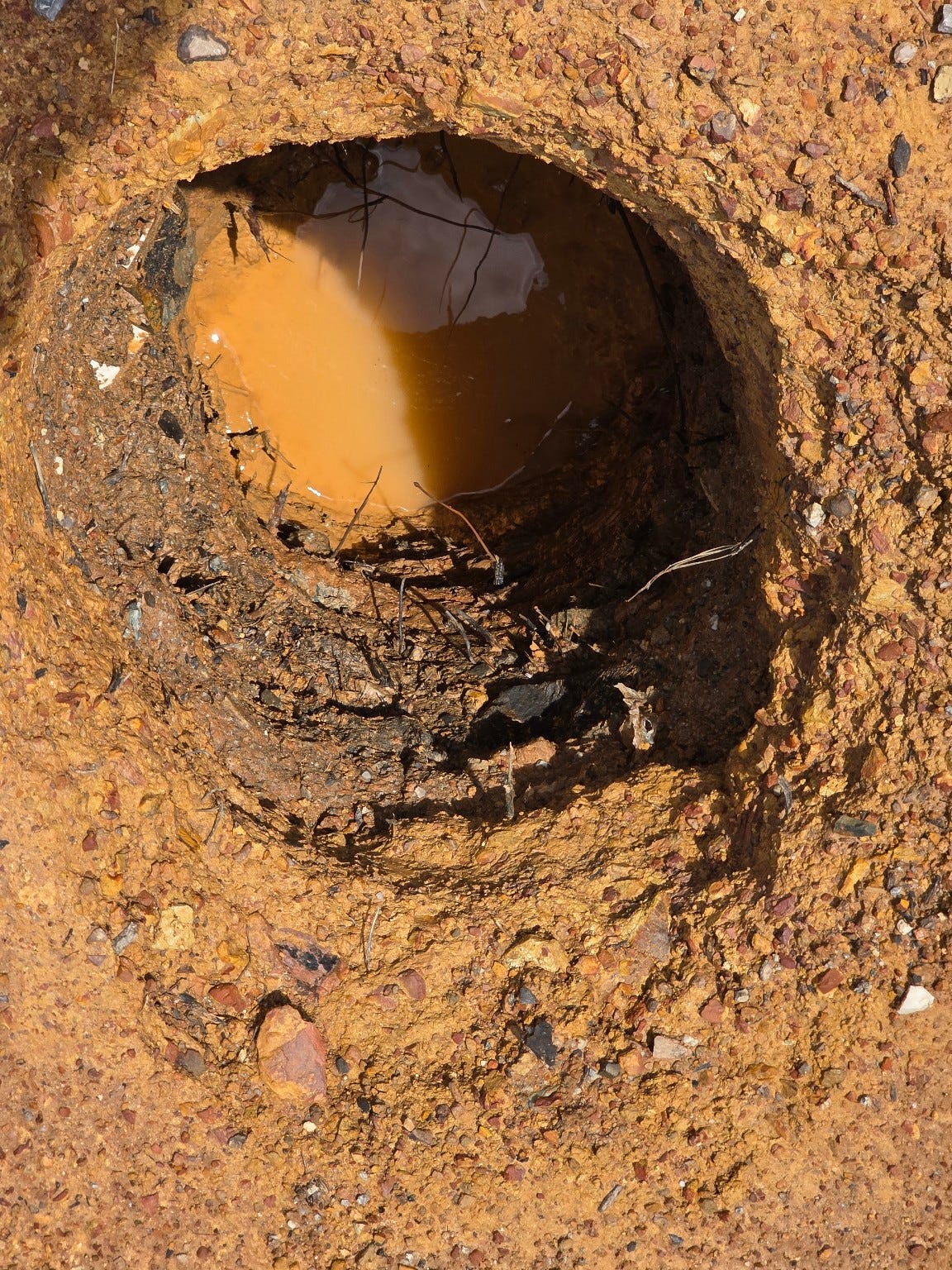
So the holes are dug. Not nice little suburban garden patches with fairy lights and fairy tales, but real bastard holes—deep, rude, ragged—like the earth’s been punched in the gut by a man who’s had enough. There’s mud in them now. The rain came, uninvited, like every other damn thing that shows up when you're already halfway through something hard. Water sits at the bottom like it’s got nowhere else to be, pooling in those trenches as if the world’s just waiting to see if you’ll fill them or let them rot.
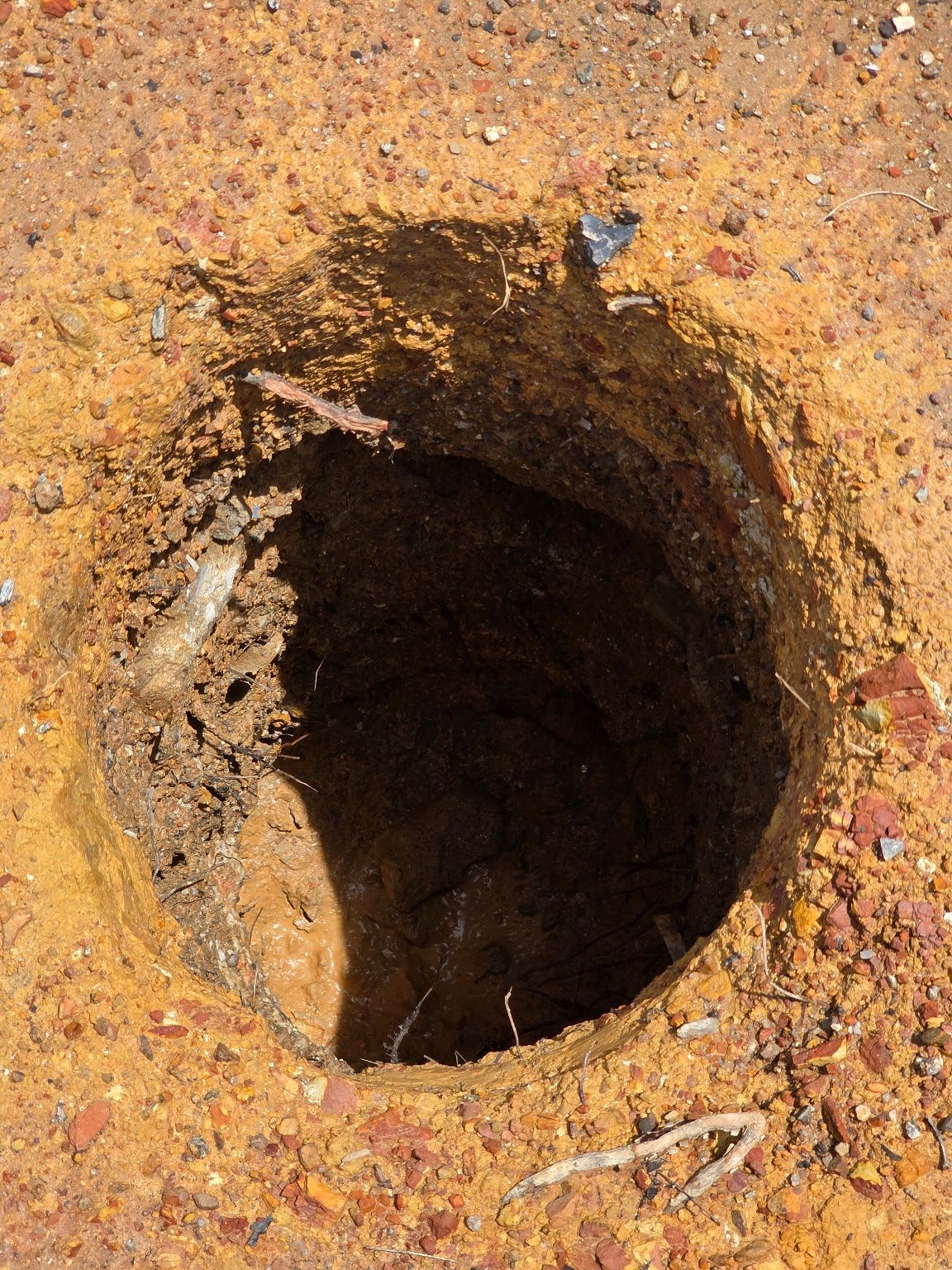
And the ground? It’s been levelled, not by committees or clicky pens and clipboard dreams. By hand. By labour. By blunt force and will. Not some plastic-souled efficiency model but the kind of levelling that makes your back ache and your spine hum. You stare at it afterwards and know you’re staring at the start of something—not the middle, not the promise. The beginning. That’s all you ever get in this world if you’re honest.
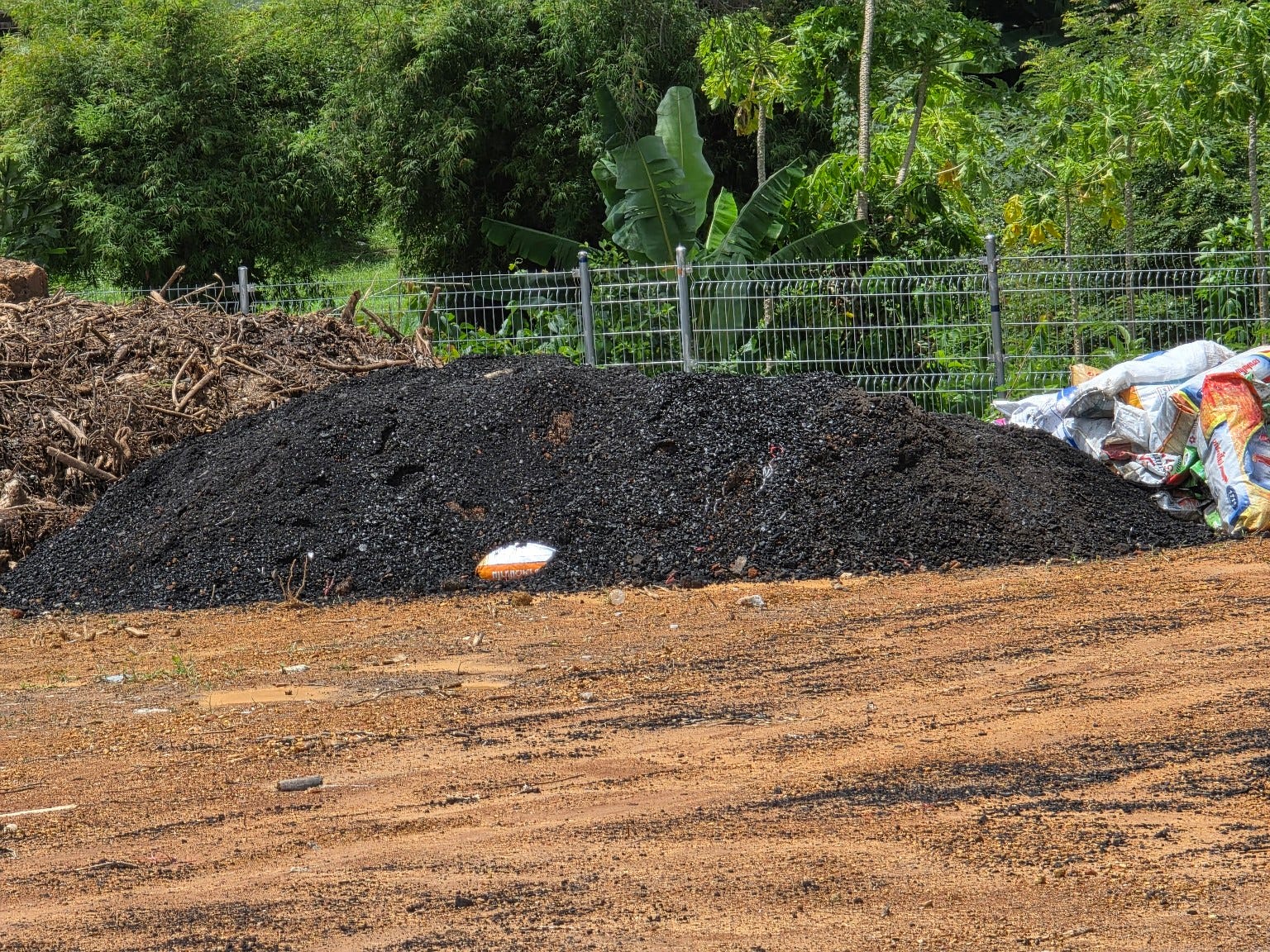
Then comes the black stuff. Not tar, not poison, not ashes from some cremated lie. Biochar. Crushed carbon. The leftovers of trees that got cooked without flame, suffocated on purpose in a barrel with no air. It’s the black bones of vegetation that once clawed at the sun and now get tossed back into the soil like a curse and a cure all rolled into one. Looks like hell. Works like salvation.
You grind it down, you throw it in, and you mix it like you’re stirring secrets into a grave. And here’s why it matters: the dirt around here’s too quick to forget. Pour fertiliser on it and it’s like handing a drunk a twenty—it’s gone in a flash and leaves you worse off next week. But biochar, that shit sticks around. It’s got memory. Porous like the lungs of the earth. It holds onto water like it’s been thirsty its whole life. And nutrients? They don’t get washed away in the first storm. The char grabs them. Hugs them tight. Says, “You stay put. We got roots coming.”
This is agriculture for people who know the ground doesn’t owe you anything. You put in the time, you put in the char, and you wait. The crops come up stronger. Not because some pamphlet said so but because the earth finally has a spine. Microbes breed in that carbon matrix like they’ve found the last good motel in town. The soil breathes better. Feeds better. Lives longer. That black powder’s not just amendment—it’s insurance. It’s structure. It’s a reminder that you don’t get food without sweat, and you don’t get good food without scars.
They don’t tell you this at garden centres. They hand you plastic buckets and soft words. But biochar’s for people who’ve watched plants die. Who’ve watched money rot in the ground because the dirt forgot how to hold anything real. You don’t add biochar because it’s trendy. You add it because you’re tired of wasting time. You’re tired of repeating the same damn cycle—feed, flush, fail. Biochar breaks that loop. It locks things in. It turns the soil into something that works with you, instead of mocking you every season.
And yeah, it’s raining. And yeah, the pits are wet. But that’s part of it. That’s how you know it’s real. Water in the holes means you’ve touched something living. This isn’t an architectural diagram. This isn’t a fantasy. This is mud and charcoal and rain and patience. And later—if you're lucky and stubborn—plants.
That’s the truth of it. Not pretty. Not clean. But you want to grow something that lasts, you better be ready to dig deep, mix black into red, and trust that even charred remains can grow something worth the wait. The world’s built by men who can stand in a soaked trench and still see a harvest.
So we dig, we level, we char, and we keep moving. That’s farming. That’s life. That’s the whole goddamn story.
In a world that worships the sterile geometry of abstraction, there comes a time when one must bow not to the blueprints, but to the rain. The foundations have been dug—not with antiseptic precision, but with the truth of sweat and iron and rain-soaked defiance. And now, they hold water. Yes, water. Muddy, thick, primordial. That most ancient of collaborators in all honest creation. You see, the bureaucrats would call it a setback; the poets and engineers know it as proof. Proof that the earth was touched. That it responded.
Water pooled in those foundational pits like truth in the soul of a drunk—heavy, undeniable, and impossible to ignore. It hasn’t merely rained; it has rained in full opera, thunder and all. The type of storm that makes you forget that calendars exist. And what remains in its wake is not disorder, but potential—wet, glistening, brown-gold potential.
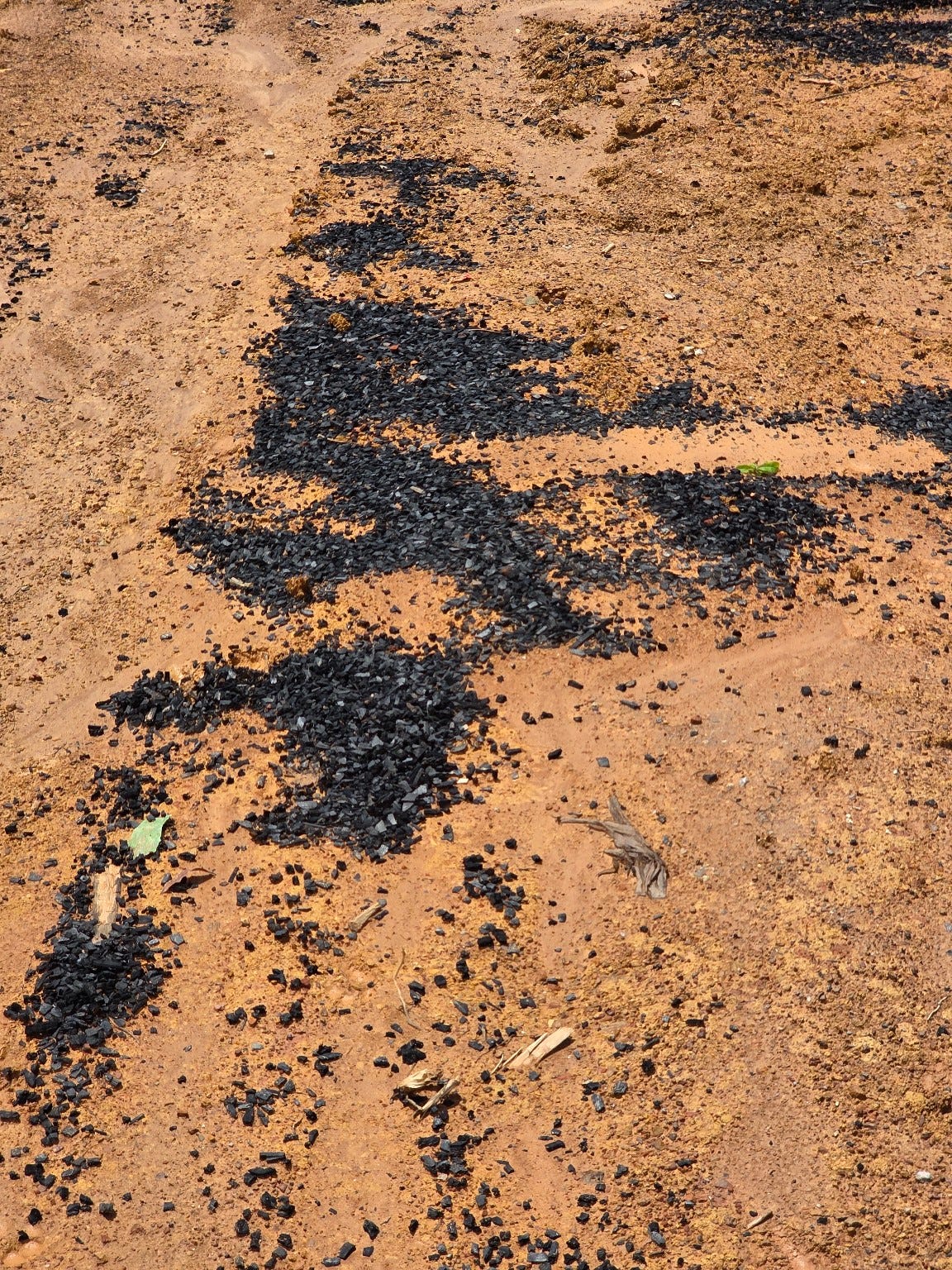
The biochar. Black, brittle, burnt truth. The charred bones of trees that once stood upright in defiance of entropy, now returned to the soil—not as corpses, but as philosophers. Biochar is not an additive. It is memory made carbon. Each flake a whisper of resistance. Of fire endured and transformed. It is being mixed now into the earth—not as ornament, but as amendment. The old is feeding the future. The dead are being made useful. And that is the closest thing to justice we get in this life.
The process is raw. It does not beg for approval. It does not wait for permission. It proceeds. You look at the charcoal-strewn ground and think: this is what a revolution looks like at rest. The soil has been democratised by ash. The holes dug with pain are now filled with the water of consequence, and that, my dear, is poetry that does not rhyme.
Men will walk on this one day and not know. They’ll see a structure and call it clean. They’ll never know the black beneath. But you will. And that is enough.
The earth has been moved. The water has joined. The fire has spoken. The work is beginning.