
On the Space Between Breaths
Of Silence, Memory, and the Self: Precision, Power, and the Ethics of Motion

On the Space Between Breaths: Precision, Power, and the Ethics of Motion
I. The Ontology of the Pause: Where Will Is Forged
There exists a moment so easily dismissed, so infinitesimally small it habitually evades the hurried mind’s superficial grasp—the profound, often unacknowledged, space between breaths. This is not merely a symbolic construct, nor a fleeting metaphor for introspection, but an ontological fact, a fundamental truth of our very being. In this precise, unyielding interval, the physical body momentarily ceases its relentless rhythm; the lungs, for a vanishing span, neither draw in the vital air nor expel the spent. It is within this span of exquisite silence that we are brought, abruptly and undeniably, to the very edge of will itself, confronting its raw, unmediated potential. This is not a passive retreat from the world's demands, nor a mere yielding to biological necessity. Rather, it functions as a crucible, a refining fire for the spirit, where the dross of unexamined impulse is burned away, leaving only the pure metal of intent. Here, in this sacred stillness, the true nature of decision is revealed, unclouded by the clamor of external pressure.
The world shouts. Let it. You—you will act. But only once it is yours to do so.
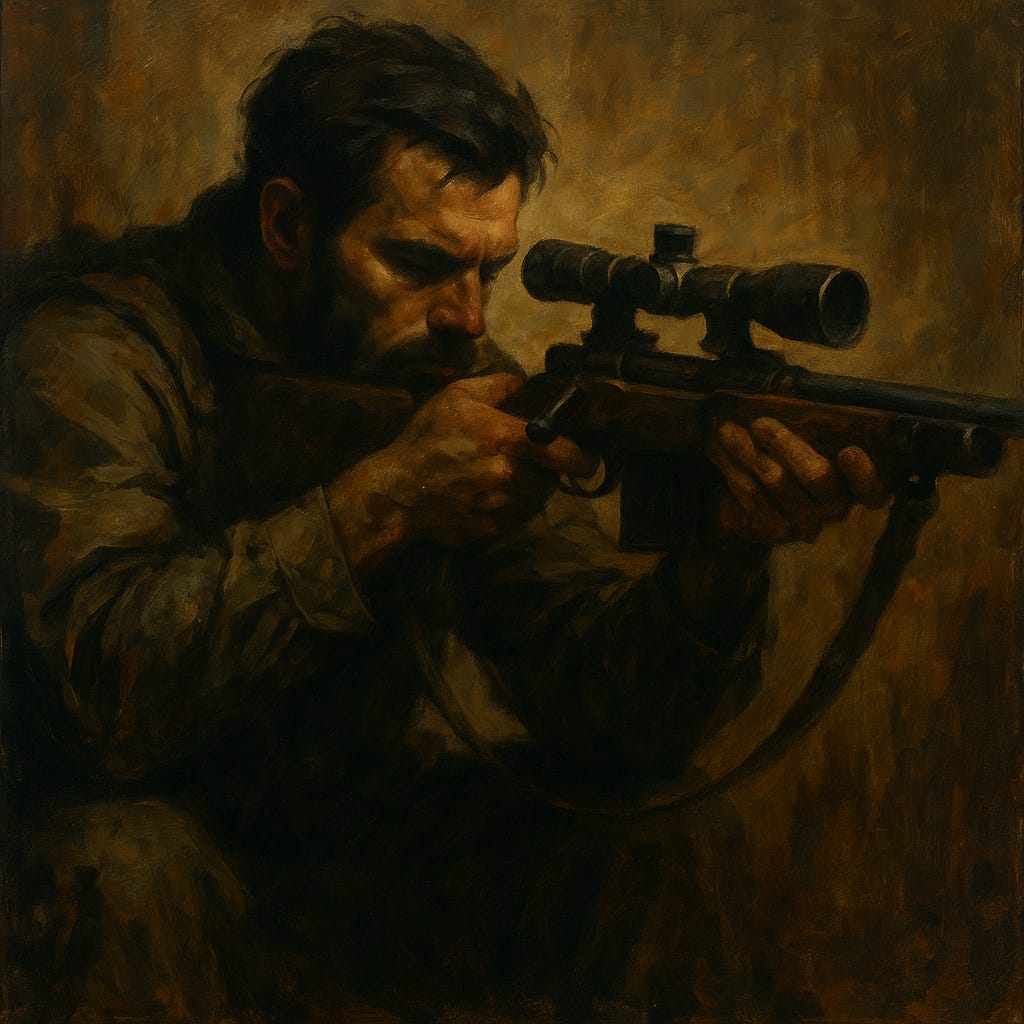
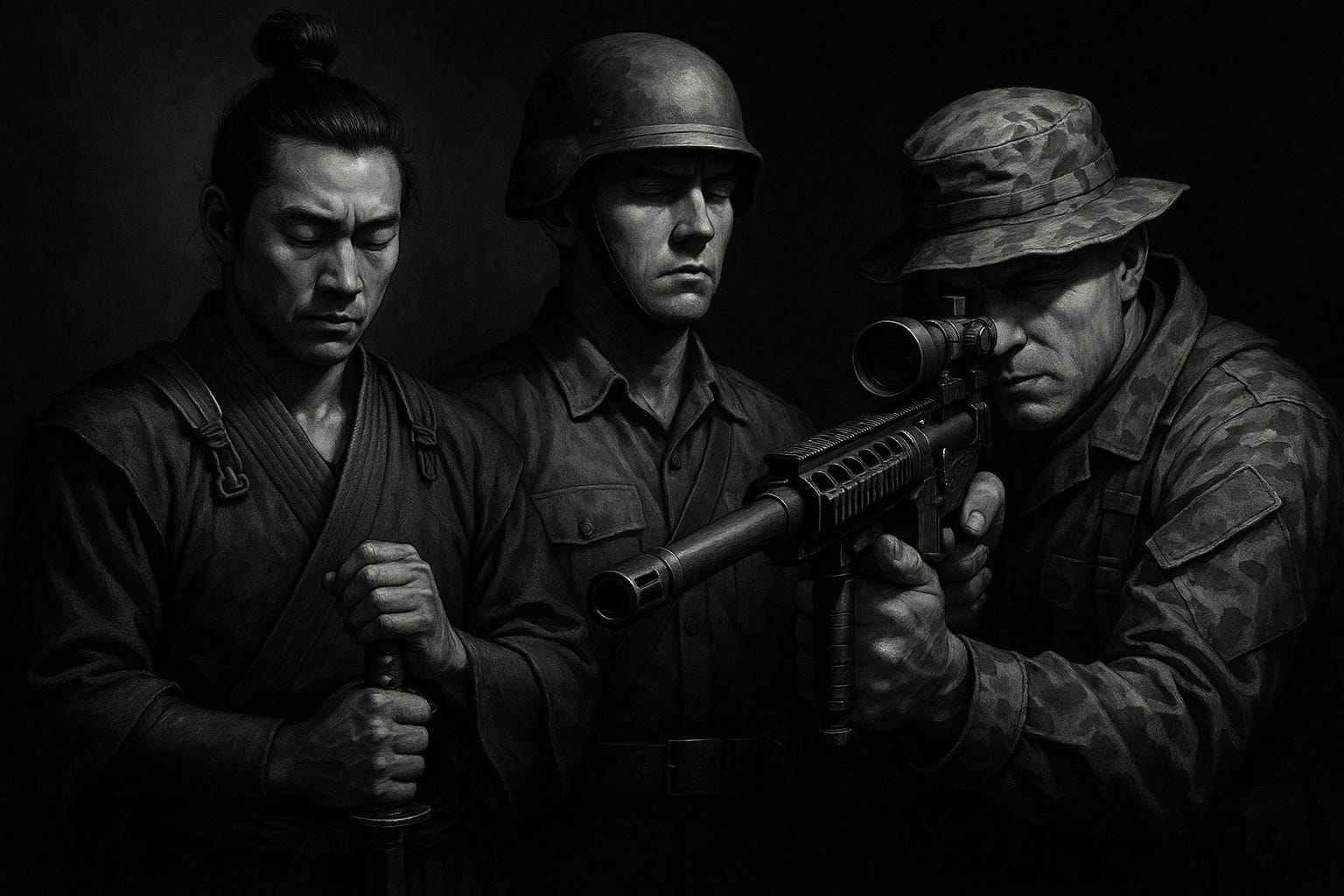
The pause challenges conformity’s pull, forging a disciplined will to overcome. This micro-eternity, habitually ignored by the vulgar who, in their ceaseless agitation, mistakenly conflate mere motion with genuine vitality, believing that constant activity equates to meaningful life, is, as Baltasar Gracián, the astute master of discretion, would sagely remind us, the ultimate and most profound test of one's internal substance and true character, revealing the depth of their inner cultivation and self-possession. Indeed, one might even venture to assert, with a touch of Oscar Wilde’s exquisite wit, that the only thing more profoundly tedious than being perpetually discussed by others, a fate reserved for those who live for external validation, is the tragic inability to discern the opportune moment for one's own dignified, impactful silence, a silence that speaks volumes precisely because it is chosen, not imposed, and thereby commands attention through its very absence. This is the essence of Gelassenheit, a releasement not into passivity or resignation, but into a deeper, more authentic engagement with being, as Heidegger might articulate it—a letting-be that precedes and informs all genuine action, allowing truth to unfold without coercion. The pause is a warrior’s focus, like a samurai’s breath before a cut, where the world narrows to a single, unerring line of intent, honed by years of disciplined practice; it is the military cadence, where the pause between commands dictates the synchronized, decisive movement of a unit; the sniper's precise pause before the shot, where the world narrows to a single, unflinching intent—a moment of absolute calibration where external noise is silenced by internal focus.
II. Beyond Compulsion: The Ethics of Deliberation
The modern world mistakes ceaseless motion for mastery, worshiping the immediate over the enduring. Algorithms and social media metrics fuel a pervasive anxiety, urging us to react without reflection. Yet, unmoored motion is compulsion, not agency. To be everywhere is to be nowhere; to be always moving is to be lost. The Stoic pauses, like an archer before the shot, to align intent with principle, ensuring action is deliberate. As Epictetus noted, our judgment, not events, shapes us—judgment honed in the pause’s quiet forge, where choices are shaped like steel.
The unexamined life is not worth living. The unexamined action is not worth doing.
The Stoic, in stark contrast to this prevailing ethos, does not embrace the pause as a means to retreat from the world's demanding engagement, to escape its challenges. He embraces it as a strategic vantage point, a moment of profound internal calibration, a deliberate withdrawal into the inner citadel of the mind. He pauses with a singular, resolute purpose: to measure his intent against his principles, to affirm his values, and to precisely aim his subsequent action, ensuring it aligns with his inner compass, his logos, his guiding reason. Consider a judge pausing before a verdict, her breath held as she weighs justice against bias, aligning her ruling with principle; or a parent pausing before responding to a child’s outburst, choosing understanding over haste. This breathless precision is not a sign of timidity or hesitation. It embodies the full, unwavering presence of mind, the complete cognitive and volitional engagement, that is absolutely essential before an irrevocable commitment to action is made. This profound revaluation of the pause, transforming it from a mere sign of timidity into an undeniable testament of formidable will, is, in its essence, a profoundly Nietzschean act, a radical re-evaluation of what constitutes strength, shifting the locus of power from external appearance to internal discipline and self-command. Gracián, with his characteristic shrewdness, would undoubtedly concur, noting that prudence, that most cardinal of virtues, invariably dictates a strategic delay, for "haste is the mother of error," and that true judgment requires time for ripeness and considered thought, preventing impulsive mistakes. And truly, Oscar Wilde, with a knowing glance and a subtle curl of his lip, might muse that nothing is quite so utterly devoid of genuine charm, or so aesthetically unappealing, as a life lived without the occasional, exquisitely timed, and thoughtfully chosen punctuation of deliberate inaction, a life that lacks the artistry of self-control and conscious design, a life of unexamined busyness.
Nietzsche, in his seminal explorations of human motivation, wrote extensively of the will to power—a fundamental drive towards self-overcoming and mastery, a striving for growth and excellence, a constant becoming, a perpetual transcendence of one's current state. Yet, what is the true nature of power when it is utterly devoid of calibration? Without the profound, counterbalancing force of silence to temper and counteract the wild tangle of unchecked desire, like a river breaking its banks, power inevitably devolves into a brutal tyranny of the self by the self, a chaotic and ultimately self-destructive force that consumes its own origin, leaving only wreckage and regret. As Scrutton, in his lucid philosophical insights, so eloquently reminds us, authentic liberty is not discovered in the wholesale rejection of all structure—for structure provides form and direction, a necessary framework for existence—but rather in the conscious, deliberate, and self-aware inhabiting of it, making it one's own, bending it to one's purpose, thereby transforming constraint into discipline. The pause, therefore, is not merely an interval; it is the vital space where structure becomes truly legible, where its inherent logic and purpose are revealed, allowing for conscious engagement rather than blind adherence. It is the crucible where the inherent chaos of unexamined impulse is confronted directly and, through disciplined awareness, effectively contained, transmuted into directed energy, like a river channeled for power, or a wild fire harnessed for warmth. It is, in its most fundamental aspect, the indispensable precondition for moral action, for any act imbued with genuine ethical weight and integrity, for it is here that principles are tested against impulse, and values are affirmed. For the unexamined will, as Nietzsche, in his stark warnings against the "last man," so presciently cautioned, is a force of immense and inherent danger, perpetually prone to chaotic and ultimately self-destructive manifestations, leading to a life of reactive mediocrity, a mere shadow of what it could be, a life without genuine purpose. Gracián, with his characteristic shrewdness and profound understanding of human nature, would undoubtedly add that true sagacity and enduring effectiveness lie not in the unbridled and indiscriminate display of raw force, but rather in its judicious and precisely calibrated application, for "a single drop of prudence is worth more than a sea of knowledge," emphasizing the power of measured thought and foresight, a strategic wisdom. And how utterly unoriginal, indeed, how aesthetically uninspired, Wilde might quip with a dismissive flick of his wrist, is the man whose conception of power is merely a crude and ostentatious display, utterly lacking the subtle artistry and profound elegance of deliberate restraint and cultivated self-possession, a life without internal depth or genuine creative force, a life that is all noise and no substance.
IV. The Aesthetics of Restraint: Sovereignty Through Delay
Action, when it is utterly divorced from the contemplative pause, inevitably devolves into a mere masturbation of ego, a self-serving and ultimately barren exercise that produces much heat but little light, a frantic display without substance or lasting impact. Consider the activist who, in his fervent zeal, screams his convictions without ever pausing to genuinely listen, thereby becoming part of the very noise he seeks to combat, losing his message in the din and alienating potential allies; the entrepreneur who, driven by insatiable ambition, builds ceaselessly without ever contemplating the ultimate end or purpose, accumulating without meaning, creating without true value, becoming a slave to his own creations; the thinker who, in his intellectual arrogance, opines profusely before ever truly engaging with the profound act of understanding, thereby substituting assertion for insight, and dogma for truth, becoming a purveyor of unexamined ideas. These individuals are not, in any meaningful sense, exemplars of authentic agency; rather, they are poignant symptoms of a culture profoundly dislocated from the vital practice of deliberation, a culture that has lost its capacity for genuine thought and self-command, succumbing to the tyranny of the immediate. Without the sacred, interstitial space between breaths, we become tragically consumed by our own unexamined reflexes, rendered utterly incapable of genuine judgement precisely because we have, through our own neglect, effectively amputated the very mechanism of internal reckoning, severing the connection to our inner moral compass and the voice of reason. Nietzsche would, with his characteristic incisiveness, undoubtedly diagnose this pervasive phenomenon as a profound symptom of the "herd mentality," a tragic failure of the individual spirit to transcend its base impulses and cultivate the arduous path of true self-mastery, a surrender to external conditioning and the comfort of conformity, a life of unexamined obedience. Gracián, with his characteristic shrewdness and profound understanding of human folly, would undoubtedly perceive in such unexamined and impulsive action the ultimate manifestation of self-deception, for "to act without reflection is to shoot without aiming," a reckless disregard for consequence and true effectiveness, a waste of one's potential. And what a truly tedious and aesthetically unappealing performance, Oscar Wilde, with a weary sigh and a knowing glance, might observe, is the life of one who, in their profound lack of self-awareness, mistakenly conflates mere frenetic activity with genuine accomplishment, utterly lacking the grace and artistry of cultivated self-possession, a life that is all surface and no depth, a mere caricature of vitality, a life lived without true beauty.
The only true art is self-mastery, for in it, one authors not a canvas, but a soul.
To genuinely inhabit the space between breaths is to consciously and deliberately stand before one's impending act and pose the most fundamental and piercing questions: Is this action truly just? Is it unequivocally necessary? Is this act, in its deepest essence, truly mine—authored by my own principles, rather than dictated by external pressures or the clamor of the crowd? The Stoic, in his unwavering commitment to internal sovereignty, does not seek permission from the external world, for he knows true authority resides within, a self-contained citadel. Nor does he anxiously scan the horizon for the validating applause of the multitude, for such validation is fleeting and external, a mere echo that dissipates with the wind. Instead, he meticulously scans the quiet forge of his will, where choices are shaped like steel on an anvil, diligently trimming his intended action to precisely fit the immutable shape of truth, rather than bending it to conform to the fleeting whims of societal fashion or popular opinion. He speaks with the profound gravity of someone who possessed the absolute capacity to have remained silent, yet chose to articulate, thereby imbuing his words with immense weight and resonance, making every utterance count. And he acts with the unshakeable finality of someone who possessed the freedom to have done nothing at all, yet, through deliberate choice, did not, thereby making his action an act of profound will and purpose, a testament to his self-command. This radical act of self-authorship, this creation of one's own values from the crucible of one's own rigorously examined will, is, in its very essence, the core tenet of Nietzsche's vision of the Übermensch, the self-overcoming individual who transcends conventional morality to create his own, unique path, a life lived by his own rules. Gracián, with his characteristic shrewdness, would undoubtedly laud such a soul as one of profound inner substance, whose every action carries the undeniable weight of deliberate intention, thereby commanding genuine respect through their very inevitability and measured precision. And what an exquisite triumph of personality, Oscar Wilde might exclaim with a flourish of his hand, is the soul so utterly self-possessed, so completely authored from within, that its every movement and utterance possesses the inherent grace and effortless elegance of a perfectly executed aesthetic statement, rather than being dictated by the crude and uninspired demands of external validation, a life lived as a deliberate and beautiful work of art, a testament to conscious design and profound self-authorship.
V. Sovereignty Through Delay: The Unknowable Self
What appears to the frantic and unreflective mind as mere passivity is, in its profound truth, the most active and formidable form of sovereignty: the resolute refusal to act until one has achieved a complete and thorough understanding. The modern ethic, with its relentless clamor, prizes immediacy above all else—incessantly demanding, "Speak now! React now! Move now!" This digital urgency, driven by algorithms that reward instant engagement, creates a pervasive sense of manufactured crisis, a constant state of urgency that discourages genuine thought. Yet, what profound and vital opportunities does the deliberate pause truly allow? It permits the resolute refusal to speak until the chosen word has acquired its full, unassailable weight, ensuring that utterance is always meaningful and impactful, never wasted. It enables the disciplined refusal to move until the intended movement is imbued with undeniable meaning, transforming action from compulsion to purpose, a deliberate step rather than a reactive lurch, ensuring every movement is intentional. And, most crucially, it empowers the courageous refusal to become merely a node in someone else's frantic algorithm of urgency, a passive participant in a predetermined script, thereby preserving one's autonomy and unique identity, asserting individuality against conformity. Nietzsche would undoubtedly perceive in this deliberate withholding of immediate reaction a profound act of self-overcoming, a courageous defiance of the very "spirit of gravity" that perpetually seeks to pull us towards thoughtless conformity and unexamined obedience, towards the comfortable mediocrity of the herd, a life without true striving. Gracián, ever the astute strategist, would recognize the immense and often underestimated power inherent in appearing unassuming while simultaneously cultivating formidable internal reserves, for "the wise man does not say all he thinks, but thinks all he says," a testament to his inner wealth and strategic depth, a mind that holds more than it reveals. And truly, Oscar Wilde, with a knowing glance and a subtle, dismissive gesture, might declare that the relentless pursuit of immediacy is, in its very essence, the profound antithesis of genuine elegance, for "nothing is so dangerous as being too modern; one is apt to grow old-fashioned quite suddenly," implying that true timelessness lies in deliberate, unhurried creation and a disregard for fleeting trends, a focus on the eternal.
A man who, through neglect or lack of discipline, does not command the sacred space between his breaths is, in the deepest sense, not truly free. Paradoxically, he is not dangerous, not because he is inherently good or benevolent, but precisely because he is impotent—a mere servant to external stimulus, a reactive automaton, utterly lacking in self-direction, a life without true purpose. He responds not from a place of deeply held principle, but from the relentless pressure of external demands, a mere echo of the world's clamor, a life lived by reaction. Consequently, he is utterly predictable, easily programmable, and ultimately, entirely replaceable, a cog in a machine rather than a self-sufficient entity, a life without true autonomy. Nietzsche would castigate such a soul as the "last man," a creature tragically devoid of authentic will, content in his comfortable mediocrity, a mere flickering reflection of external forces and societal expectations, a life without purpose or genuine striving, a life of passive acceptance. Gracián would lament his profound lack of inner substance, for "he who is able to suppress his feelings is already prepared to betray himself," implying that a failure of self-control is a precursor to a deeper betrayal of one's own being and principles, a surrender of self. And what a truly tragic and profound lack of individuality, Oscar Wilde might lament with a weary sigh, is the life of one who, through their own acquiescence, allows himself to be so utterly and completely defined by external stimuli, becoming a mere automaton of societal expectation, utterly devoid of genuine self-authorship and the artistry of life, a life that is merely lived by proxy, a life without true beauty or meaning.
But the one who consciously holds that breath, who, through disciplined awareness, truly lives there even for a fleeting second, remains profoundly unknowable to the world in its superficiality. Such an individual is often feared, deeply respected, and frequently misunderstood, for their actions do not conform to easily categorized patterns, and their motivations are opaque to the unreflective. He is slow to speak not because he is dull or lacking in thought, but precisely because he is exact, meticulously weighing each word for its precise impact and resonance, ensuring every utterance carries its full weight and meaning. He moves only when he is truly ready, and his readiness is profoundly internal, utterly unconditioned by external circumstances or pressures, a self-generated impetus that flows from deep principle and unwavering resolve. This is the unmistakable mark of the self-legislator, the individual who, as Nietzsche so powerfully envisioned, actively creates his own values from the crucible of his own rigorously examined will, rather than passively accepting those imposed by the herd or by societal convention. As Marcus Aurelius, the philosopher-emperor, reflected, "Waste no more time arguing about what a good man should be. Be one." This is the essence of that being, a life lived in accordance with one's highest principles. Gracián would describe such a man as one of profound inner depth, whose every action carries the undeniable weight of deliberate intention, thereby commanding genuine respect through their very inevitability and measured precision. And what an exquisite triumph of personality, Oscar Wilde might exclaim with a flourish of his hand, is the soul so utterly self-possessed, so completely authored from within, that its every movement and utterance possesses the inherent grace and effortless elegance of a perfectly executed aesthetic statement, rather than being dictated by the crude and uninspired demands of external validation, a life lived as a deliberate and beautiful work of art, a testament to conscious and unyielding design, a life of true self-mastery.
VI. The Unflinching Aphorism: A Call to Inhabit
This is not mere slowness. It is not passive inertia. It is density. It is action folded in upon itself, gaining profound weight and significance, becoming a force of undeniable impact. It is the moral mass required to imbue the act not only with external effectiveness, but with intrinsic justification, ensuring its alignment with one's deepest principles and ethical framework. Every truly meaningful revolution, whether societal or personal, began in the profound silence of deep contemplation, in the quiet crucible of internal transformation where ideas are forged and wills are tempered. Every unshakable decision, every act of unwavering resolve, was once a breath, meticulously held, a moment of internal reckoning and profound self-communion, a space of absolute clarity and unflinching self-awareness. This is the profound weight of a self-created value, a testament to the will's formidable capacity to imbue action with ultimate significance, a concept deeply resonant with Nietzsche's philosophy of the revaluation of all values, where meaning is forged from within, rather than inherited or imposed. Gracián, ever the practical strategist, would undoubtedly perceive this as the ultimate form of strategic accumulation, for "great ability is often concealed in apparent inaction," implying a formidable internal reserve and a deliberate cultivation of inner power that is not outwardly displayed, but held in reserve. And indeed, Oscar Wilde, with a knowing glance and a subtle, dismissive gesture, might conclude that the most profound aesthetic statements are rarely loud or ostentatious, but rather possess a quiet, unyielding power, a perfect elegance born of deliberate and self-contained creation, utterly independent of external validation, a testament to the artistry of a life lived with conscious intent and profound self-possession.
So, cultivate and practice it: the micro-eternity between inhale and exhale. Do not attempt to fill it with superficial distractions or the clamor of the external world, for its true value lies in its emptiness, its capacity to hold. Do not flee from its profound stillness or its challenging introspection, for it is there that true self-knowledge resides, unclouded by external noise. Inhabit it. That sacred space is where your will becomes sharp, honed by deliberate contemplation, a blade forged in silence. That is where your name is forged, not by external acclamation or fleeting fame, but by an act of profound self-authorship, a declaration of internal sovereignty, a testament to your unique being. The world shouts. Let it. You—you will act. But only once it is truly yours to do so, once your action is an emanation of your deepest principles, a deliberate choice born from the stillness of your own sovereign will, a testament to your mastery over self.
The truest power is the silence that precedes the inevitable.
Section III.?